
The Best Types of Plants for Aquaponics: What Grows Well and Why
When it comes to choosing plants for your aquaponics system, not all crops perform equally. Some thrive in the nutrient-rich, soilless environment, while others may require more care or simply aren’t a good fit. Whether you’re running a media bed, deep water culture (DWC), or nutrient film technique (NFT) system, here’s a look at some…


Our Growing Medium: Lightweight Expanded Clay Aggregates (LECA)
Lightweight Expanded Clay Aggregates (LECA) are a top choice for growers seeking a reliable, long-lasting, and efficient medium. These small, porous clay balls are superheated to create a lightweight structure that offers multiple benefits—especially in aquaponic systems. Why Use LECA? Its excellent drainage and aeration properties help prevent root rot by retaining moisture while still allowing…

New urban farm project launched by Sheffield’s Institute for Sustainable Food
The University of Sheffield’s Institute for Sustainable Food (ISF) has officially launched its exciting new project at Tinsley Tingas! In one of its former classrooms, an abandoned school building now gives home to a set of hydroponic systems providing a variety of herbs and leafy greens. The soil-free production systems were built using low-cost up-cycled…


Urban Aquaponics?
One of the beauties of aquaponics systems is their flexibility and scalability – regardless of plot size or position, an aquaponics system can be designed to suit. As a result, there is growing interest in their use in urban areas, whether it’s a basement, attic, garage, cupboard or warehouse. This is important because, apart from…

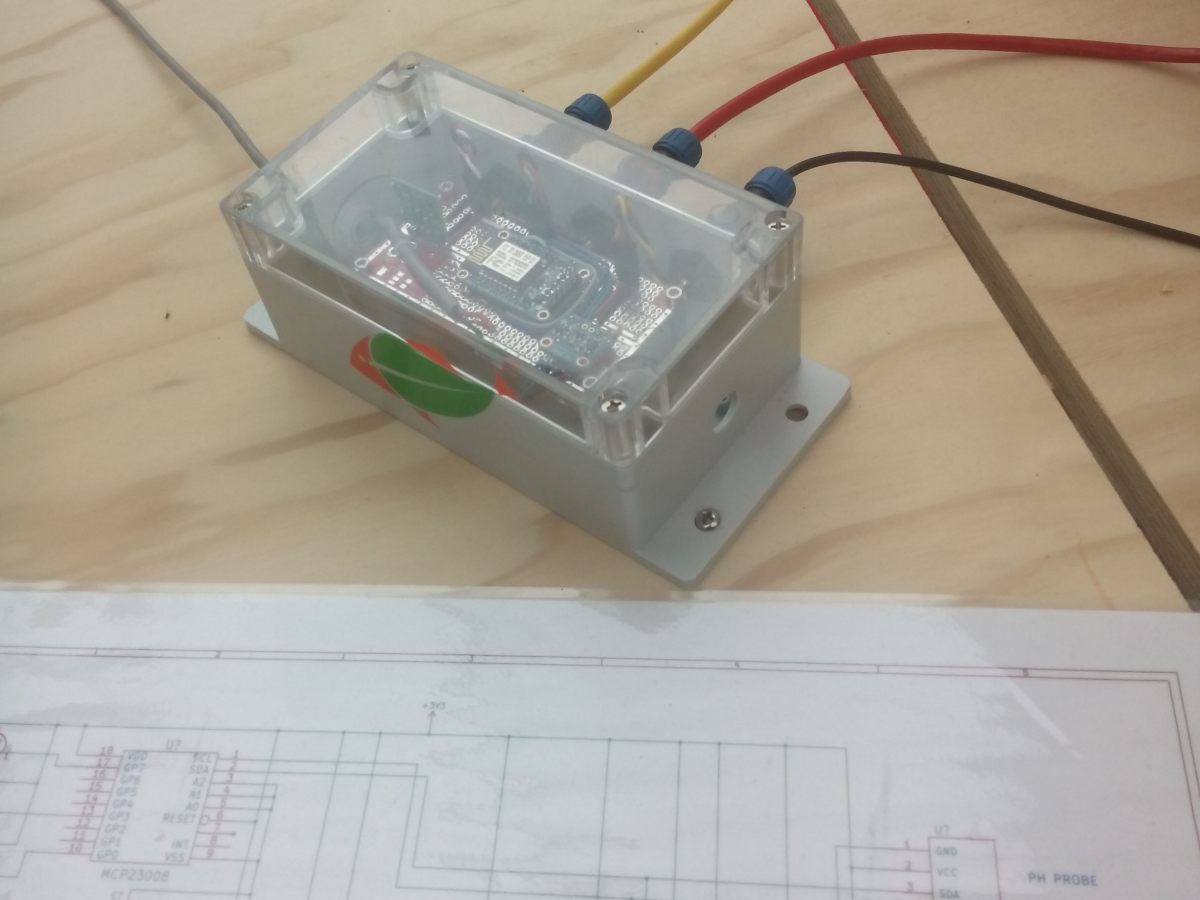
WaterElf – an open-source aquaponics monitoring and control device
WaterElf is a micro-controller with built-in wifi, a bunch of sensors, valve controls, electrical socket switching and data logging to the cloud. Here’s the last prototype to emerge from the lab into the wild: Adding a WaterElf to aquaponics means you can ensure that the key water parameters such as pH and water temperature stay in the correct…

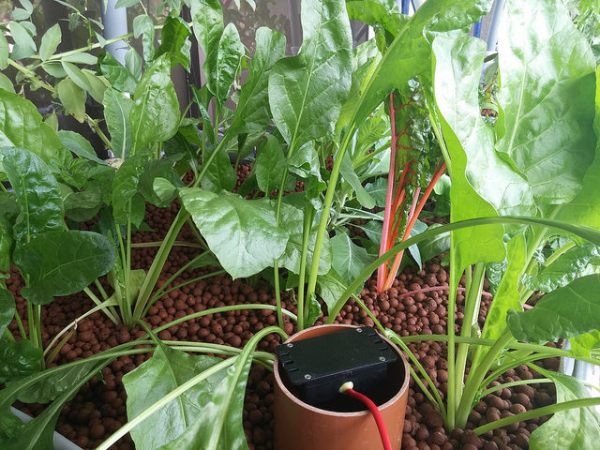
The Water Flow and the Water Valve in our FAO based system
Our friends at the Aquaponics Lab have done an interesting post last week describing the history of the Water Valve. Lots of people were intrigued on exactly where the water valve is installed and how it’s operated. They’ve asked if we could help to clarify it by showing our FAO based system and how we operate…


Short on Potassium?
One of the trace elements that aquaponics systems sometimes get short on is potassium, and Paulo thinks that might be why some of the leaves on my cucumber and strawberries are a bit peaky: Today I’ve started adding 10 grammes of K2SO4 per day — I’ll report back in a week! A few more pics…

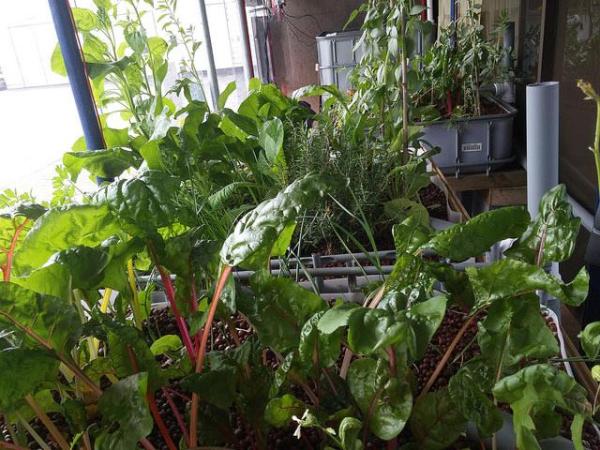
Nitrate Deficiency in Aquaponics
It has been a few months since we started the University of Sheffield aquaponics system and the plants have been developing really well: Although a closer look reveals something else! Last week one of our team members found out there was a kind of yellowing developing in some of our plants. We set out to…

Aquaponics and self-sufficiency
A number of recent articles (e.g. http://bit.ly/29uuxQk and http://bit.ly/2asxNk6) have highlighted the efforts of Californian company ReGen to develop a demonstrator village of 100 self-sufficient homes in the Netherlands. ReGen then plans to build more villages in Sweden, Norway, Germany and Denmark. ReGen’s self-sufficiency model estimates that a family of three would need 639m2 to…

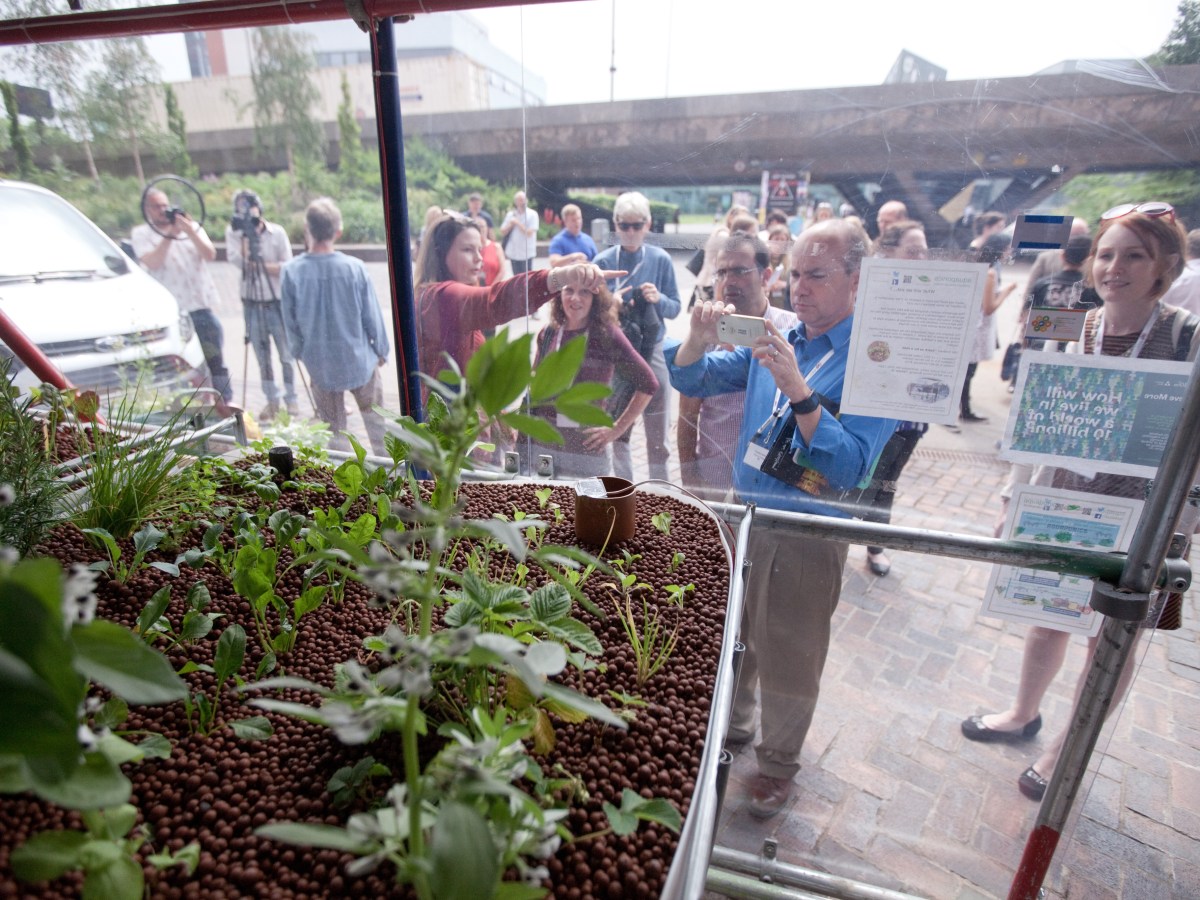
Aquaponics: why bother? (Part 1)
A discussion with a member of the public in the Winter Gardens whilst feeding the fish prompted me to write this blog post to share the motivations of trying to develop aquaponics in Sheffield, and the UK. As the global population spirals towards its predicted value of 9.2 billion by 2050, demand on global food…


And where are the bacteria..?
This is one of the most frequently asked questions we get from people about our recently installed aquaponic system opposite the Students’ Union of the University of Sheffield. And the answer is usually something like this: “Well, you know, in the water. Probably everywhere – we think so, at least.” And that is about as…


Proudly powered by WordPress
